Loading…
Açıksaray Ruins
Historical SitesLocal favorite
Açıksaray ("Open Palace") is a Byzantine rock-cut complex near Gülşehir, northwest of Nevşehir in Cappadocia. Carved into volcanic tuff between roughly the 9th and 11th centuries, it groups monasteries, churches, refectories, and storage rooms behind elaborately carved cliff façades, and includes a famous mushroom-shaped fairy chimney. It is atmospheric and rarely crowded.
Frequently asked questions
What is Açıksaray (the Open Palace)?
It is a Byzantine rock-cut complex of monasteries, churches, refectories, and storage rooms carved into volcanic tuff cliffs near Gülşehir, northwest of Nevşehir. Despite the name it was never a single palace but a scattered group of courtyard units, and it is famous for its finely carved cliff façades.
How do I get to Açıksaray from Göreme or Ürgüp?
First travel to Nevşehir, then take a Nevşehir–Gülşehir minibus and ask the driver to drop you near Açıksaray, from where you walk in. These minibuses run through the day but not very often, so check return times. Driving or taking a taxi is the simplest option, especially if you also want to visit Gülşehir and Nar Lake.
What is the mushroom rock at Açıksaray?
Just outside the main cluster stands a tall, elegant mushroom-shaped fairy chimney: a slender stem topped by a broad, darker cap of harder rock. It is one of the most photogenic single rock formations in the region and, because the site is so quiet, you can often photograph it with no crowds.
How long should I spend at Açıksaray and when is best?
Allow roughly 45 minutes to an hour to walk the courtyards and reach the mushroom rock, more if you like exploring caves and taking photos. Morning or late afternoon light is best, and spring and autumn are the most comfortable seasons. Bring water and a hat, as there is little shade in summer.
Are there facilities at Açıksaray, and is there an entrance fee?
Facilities are minimal, so it is best to use toilets in Gülşehir or Nevşehir beforehand. The site is open-air with simple signage and is generally open during daytime hours, opening in the morning; there may be a small entrance fee. Wear sturdy shoes and bring a small torch for the darker cave rooms.
More Historical Sites
Historical Sites
Çavuşin Old Village
Çavuşin Old Village is a half-abandoned cliff village between Göreme and Avanos where hollowed cave houses cling to a tall rock face beneath one of Cappadocia's oldest churches. It is one of those places that stops you the moment the road curves and the cliff comes into view. A whole village is carved straight into the pale stone, its dark windows and doorways stacked up the face like a honeycomb, and almost all of it is empty. People lived here for centuries, cutting rooms, pigeon lofts, storerooms and stables into the soft tuff. Then, through the twentieth century, rockfalls made the upper dwellings unsafe, and over time the families moved down to the modern village of Çavuşin at the foot of the cliff. What they left behind is not a museum in the polished sense but a village frozen mid-abandonment, quiet and slightly haunting, with far fewer visitors than the big open-air museums nearby. The reward for anyone willing to scramble up is the Church of St. John the Baptist, hidden high on the rock and thought to be among the earliest in the whole region, with roots reaching back to the fifth century. It is one of the oldest surviving churches in Cappadocia, and standing at its worn threshold with the valley spread out below is the sort of moment that stays with you. Down by the road there is a second, separate church, usually called the Çavuşin Church or the Church of Nicephorus Phocas, which preserves faded but striking frescoes said to commemorate a Byzantine emperor's passage through the region in the tenth century. Beyond the churches, the pleasure here is simply wandering. You can peer into abandoned cave homes, follow worn footpaths between the ruins, and look out over apricot orchards and vineyards toward the fairy chimneys. Çavuşin is also the natural trailhead for the Rose Valley and Red Valley hikes, so many walkers use it as a gateway to some of the finest scenery in Cappadocia, ending their walk here as the light turns golden. Getting to Çavuşin is easy. It sits right on the Göreme to Avanos road, only about three kilometres from Göreme. The Göreme-Avanos minibus, the dolmuş, passes through and can drop you at the village; it runs frequently through the day in season. A taxi is quick and cheap, and if you enjoy walking you can reach Çavuşin from Göreme on foot in under an hour through the valleys. From Ürgüp or Nevşehir, take a minibus toward Göreme first and change there, or come by car. Most valley tours also make a stop. Come at almost any time of day, though the low light of early morning and late afternoon flatters the honey-coloured cliff and is far kinder for photographs. Allow around forty-five minutes to an hour for the old village and its churches, and much longer if you plan to link it with a valley walk. Midday in summer is hot and shadeless on the rock, so bring water and a hat. A few honest tips before you go. The old cave houses are genuinely unstable, so look and photograph but do not climb into anything that feels precarious, and keep small children close. The path up to the Church of St. John the Baptist is steep, loose and exposed in places, so proper shoes with grip make a real difference and it is best skipped in wet weather. The frescoed lower church usually charges a small entrance fee, so carry a little cash. There is not much shade and only a handful of small shops and cafés in the modern village below, so stock up beforehand. Treat the site with the same respect you would any historic ruin: it is fragile, beautiful, and best left as you found it.
Historical Sites
Saruhan Caravanserai
Saruhan Caravanserai is a beautifully restored 13th-century Silk Road inn near Avanos, famous today for its atmospheric evening whirling dervish ceremonies. Standing just east of the pottery town of Avanos, Saruhan (also spelled Sarıhan, the "yellow inn") is one of the finest surviving Seljuk caravanserais in Cappadocia. It was built in 1249, during the reign of Sultan Kaykhusraw II, as a fortified rest stop on the great trade route linking Aksaray and Kayseri toward the Persian world. In an age before hotels, caravanserais like this one gave merchants, their camels and their precious cargo a safe place to sleep, water the animals, trade news and pray, roughly a day's journey apart along the road. Walking through its gate today, you step straight into that world of Silk Road commerce. The building is made of warm honey-coloured stone that glows almost golden in late-afternoon light, which is likely how it earned its name. The grand portal is the showpiece: a soaring doorway carved with interlacing geometric patterns and muqarnas (stalactite-like stone honeycombing) typical of Seljuk craftsmanship. Inside, the courtyard opens up with a small raised prayer room (a köşk mescit) set on arches at its centre, a rare and elegant feature. Beyond the courtyard lies the covered winter hall, a long vaulted nave of massive stone arches where caravans and animals sheltered from the harsh Anatolian cold. The acoustics and half-light of this hall are extraordinary, which is exactly why it has become such a special evening venue. That evening use is the main reason most visitors come. Saruhan regularly hosts Sema, the meditative whirling dervish ceremony rooted in the teachings of Mevlana (Rumi). Under the vaults, dervishes in white robes and tall camel-hair hats turn slowly to haunting live ney flute and drum music. It is a genuine spiritual ritual, not a folk show, so it is performed with quiet reverence and photography is usually restricted during the turning. Sitting in this 800-year-old hall while the music echoes off the stone is, for many, the most moving hour of their whole Cappadocia trip. During the daytime you can visit the caravanserai simply as a historic monument. There is a small entrance fee, it generally opens in the morning and closes around sunset, and half an hour to forty-five minutes is plenty to wander the courtyard, admire the carved portal and enjoy the cool, echoing halls. It rarely feels crowded by day, so it is a peaceful stop compared with the busier open-air museums. Getting there is easiest with your own car or a taxi, as Saruhan sits a few kilometres outside Avanos on the road toward Kayseri, a little away from the main village. From Avanos town centre it is a short drive; from Göreme or Ürgüp, count on roughly 20 to 30 minutes. Public transport is limited: minibuses (dolmuş) run frequently between Göreme, Avanos and Ürgüp during the day, but they will drop you in Avanos rather than at the door, so you would still need a taxi for the last stretch. For the evening Sema, the simplest option by far is one of the many tours and hotel shuttles from Göreme, Ürgüp and Avanos that include transport and a ticket, since there is no reliable late-night bus back. A few honest tips. Bring a light layer even in summer, because the stone halls stay cool and the desert air turns chilly after dark. If you are coming purely for the whirling ceremony, check the current schedule and book ahead in high season, as popular evenings fill up. Combine your visit with the pottery workshops and riverside cafés of Avanos, or with a sunset over the nearby valleys, to make an easy and rewarding half-day. And treat the Sema for what it is: a centuries-old act of worship best received in respectful silence.
Historical Sites
Ağzıkarahan Caravanserai
Ağzıkarahan Caravanserai is a monumental Seljuk roadside inn built in 1231, one of the best-preserved on the old Silk Road between Aksaray and Nevşehir. If you want to understand how medieval trade actually worked, this is one of the most rewarding stops in the wider Cappadocia region, and it usually has hardly anyone else around. A caravanserai was a fortified inn where camel caravans carrying silk, spices, and goods could stop for the night, rest their animals, repair harnesses, and sleep in safety. The Seljuk sultans built a whole chain of them roughly a day's walk apart, and travellers could stay for up to three nights free of charge. Ağzıkarahan is one of the grandest survivors of that system, and standing inside it you can genuinely picture the courtyard full of loaded camels, merchants, and traders from a dozen different lands. The building was begun under Sultan Alaeddin Keykubad I and finished around the mid-13th century, and its scale is what surprises most people. You approach a huge, deeply carved stone portal with the geometric stalactite-style stonework the Seljuks were famous for. Beyond it opens a broad open courtyard ringed with arcaded rooms and stables where animals and lower-status travellers stayed in the warmer months. At the very centre sits the caravanserai's signature feature, a small raised mosque (called a köşk mescit) perched on four arches, so worshippers could pray above the bustle of the yard. At the back, a vast vaulted covered hall runs deep into the building; this was the winter section, sheltered and warm, where everyone crowded in during the cold Anatolian months. The stonework throughout, the ribbed vaults, the carved capitals, the honeycombed doorway, is exceptional and remarkably intact. Ağzıkarahan sits about 15 kilometres east of Aksaray, right on the historic Aksaray to Nevşehir road, beside the small village that shares its name. It is not in the core Göreme–Ürgüp valley cluster, so the honest truth is that the easiest way to reach it is by car, and it makes a perfect stop on the drive between Cappadocia and the Ihlara Valley or Aksaray. If you are relying on public transport, take a minibus or dolmuş along the Nevşehir–Aksaray route and ask the driver to let you off at Ağzıkarahan; from the highway it is a short walk to the site, but return connections can be sparse, so plan your timing and be ready to flag down a passing minibus. Many visitors pair it with Sultanhanı, the enormous caravanserai further west near Aksaray, for a proper Silk Road day. There is a small entrance fee, and the site generally opens in the morning and closes in the late afternoon, with shorter hours in winter. Allow around 30 to 45 minutes to walk the courtyard, climb up to the little mosque, and explore the covered hall. Photographers should come in the early morning or late afternoon, when low sun rakes across the carved portal and throws the stonework into deep relief. Midday light is flatter and the courtyard can get hot in summer. A few honest tips. The covered hall is dim, so let your eyes adjust and watch your footing on the worn stone. Bring water, as there is little shade and no café on site; the village nearby is tiny. There is not much signage or interpretation, so reading a little about Seljuk caravanserais beforehand makes the visit far richer. It is quiet and atmospheric precisely because it is off the main tourist trail, so you often get the whole place to yourself. If you only have time for one caravanserai and you are staying in the heart of Cappadocia, the smaller Sarıhan near Avanos is far closer; but if you are already driving toward Aksaray or Ihlara, Ağzıkarahan is the bigger, more complete, and more memorable monument, and well worth the detour.
Nearby places
Castles
Transport
Transport
Museums
Valleys
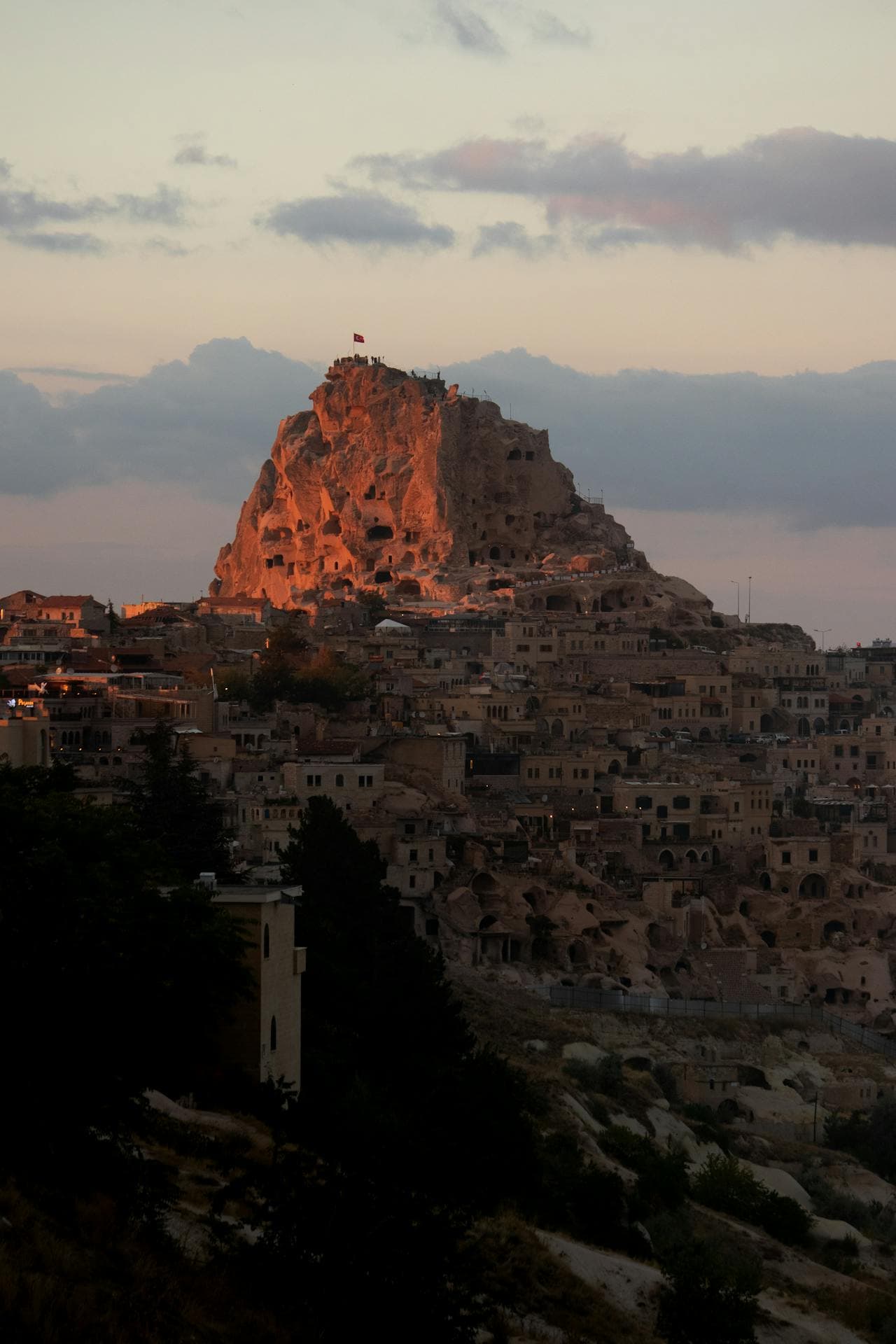
Castles
Pro tip
The best time to visit is during the sunrise golden hour. Don't forget your camera!